Which Lunch Box Packaging Material Is Best for Takeaway Food?
Introduction
The right lunch box packaging does more than hold your food. It helps protect the food, reduce spills, and keep packaging costs well managed. Paper, sugarcane and plastic containers each have their strengths. Here’s a simple way to compare them.
What Should You Consider Before Choosing Lunch Box Packaging?
Start with the food. Dry meals, oily dishes and saucy food all need different levels of protection. You should also consider portion size, lid security, delivery distance and whether customers will reheat the meal. Cost matters too, but the cheapest takeaway container is not always the best value. A box that leaks, needs extra wrapping or does not fit the portion can cost more in the long run.
Paper Lunch Boxes: Lightweight and Practical
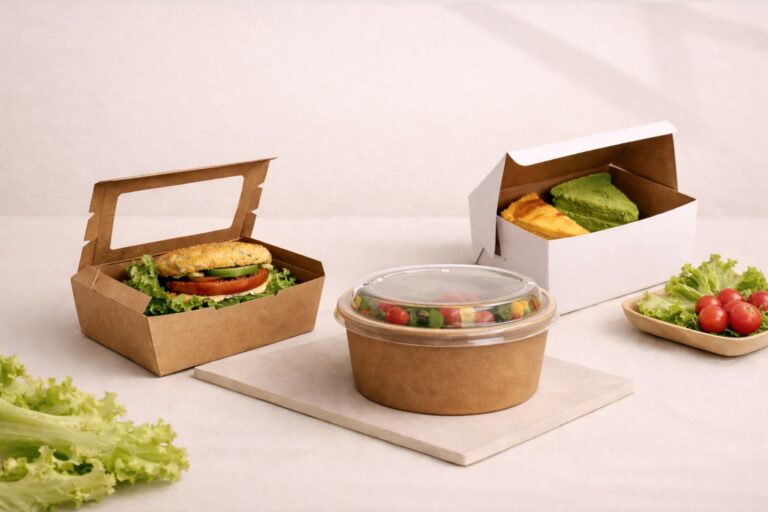
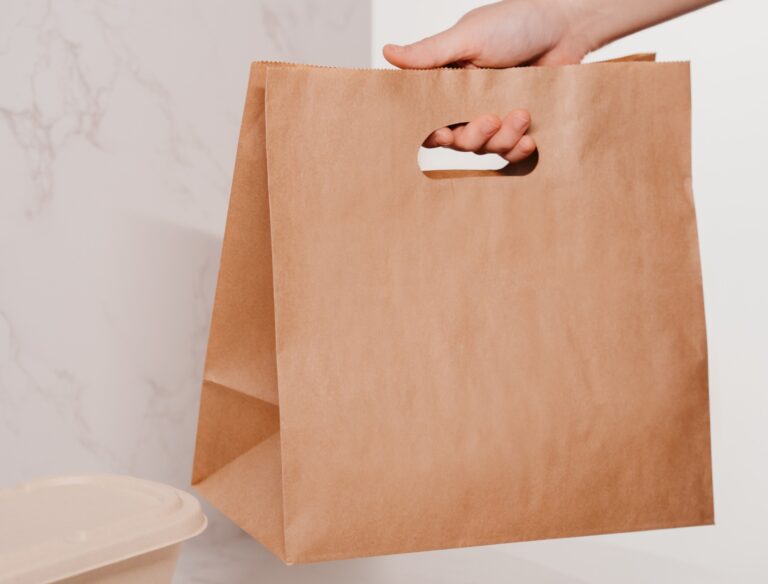
A paper lunch box is lightweight, easy to pack and available in different sizes for everyday takeaway use.
Best for: rice meals, noodles, sandwiches, fried snacks and lightly sauced food.
What to watch for: Extremely greasy or damp dishes. Check the lining and moisture resistance before use.
Choosing the right paper lunch box size also matters. A box that is too large wastes space and can make the portion look smaller. A box that is too small may affect the food and lid closure. For everyday takeaway orders, pick a size that matches your real serving, and try it out before buying in bulk.
Sugarcane Food Containers: Sturdy with a Natural Finish
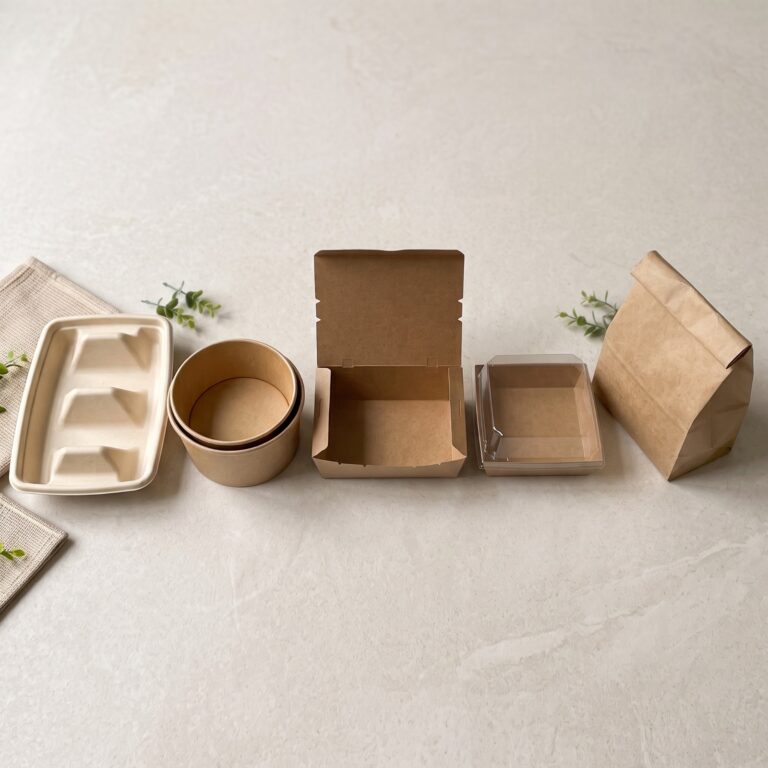
Sugarcane food containers, also known as bagasse containers, are made from sugarcane fibre. They have a firm structure and a natural finish, making them a practical alternative within the wider compostable packaging category.
Best for: rice sets, compartment meals, mixed dishes and catering.
What to watch for: lid fit, moisture resistance and storage space.
Sugarcane containers can cost more than basic paper or plastic options, especially for larger or compartment designs. The higher cost may be worthwhile if sturdiness and presentation are priorities.
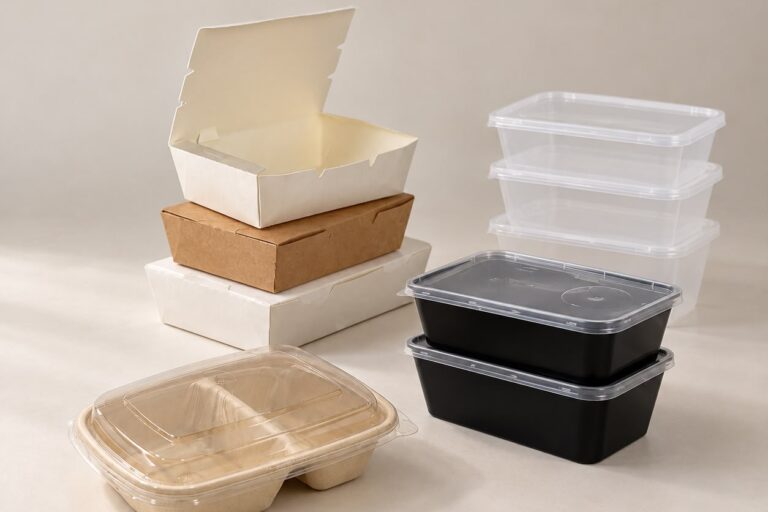
Plastic food containers are versatile, with different shapes, sizes and lid options to suit a wide range of takeaway needs. Clear containers also help improve food visibility, while secure lids can reduce spills during delivery.
Best for: wet or saucy dishes, delivery orders and food where visibility matters.
What to watch for: heat and microwave suitability.
If reheating is needed, choose a microwave-safe container and always check the product specification before use.
Cost is a general comparison only and varies by size, design and order quantity.
Balancing Packaging Cost and Performance
For F&B businesses, packaging cost goes beyond the price per container. It can also affect food quality, packing speed, storage space and the cost of handling mistakes.
A lower-priced container may look attractive at first, but the savings can disappear if it needs extra wrapping, leaks during delivery or does not fit the portion properly.
When comparing options, look at the full cost of use:
Unit cost – how much you pay per piece at your usual order volume
Wastage – whether damaged or unsuitable containers are being thrown away
Extra packing materials – such as additional bags, liners or wrapping
Storage – how much space the packaging takes up in your kitchen or storeroom
Packing efficiency – whether staff can fill, close and stack the container quickly
Consistency – whether the same size and design can be restocked reliably
Paper lunch boxes can offer a practical balance for everyday takeaway. Sugarcane containers may cost more, but can suit businesses that prioritise sturdiness and branding. Plastic food containers can be cost-efficient for high-volume operations where lid security and consistency are important.
The goal is not simply to choose the cheapest packaging. It is to choose the option that keeps costs predictable while working well for your food and daily operation.
Once you’ve narrowed down the right packaging, take a moment to check the size, quantity and supplier before placing your order. Read our guide onbuying takeaway packaging online for the key things to look out for.
Looking for a Paper Lunch Box and Food Packaging Supplier in Malaysia?
Beyond lunch box packaging, Wooba also offers a wider range of F&B packaging and accessories to support different menu and service needs. You can also pair your lunch box packaging with disposable cutlery, bamboo chopsticks and table napkins, to complete the meal.
Plastic containers with secure lids are often practical for curry, gravy and other wet dishes. Paper or sugarcane options may also work if they are designed for moisture resistance.
If you’re looking for a paper lunch box supplier in Malaysia, Wooba offers paper, sugarcane and plastic food packaging for F&B businesses, with online ordering and no minimum order quantity.