Free delivery for orders above RM500 in Klang Valley
Free delivery for orders above RM500 in Klang Valley
Free delivery for orders above RM500 in Klang Valley
Free delivery for orders above RM500 in Klang Valley
Free delivery for orders above RM500 in Klang Valley
Free delivery for orders above RM500 in Klang Valley
Free delivery for orders above RM500 in Klang Valley
Free delivery for orders above RM500 in Klang Valley
Free delivery for orders above RM500 in Klang Valley
Free delivery for orders above RM500 in Klang Valley
Free delivery for orders above RM500 in Klang Valley
Free delivery for orders above RM500 in Klang Valley
Free delivery for orders above RM500 in Klang Valley
Free delivery for orders above RM500 in Klang Valley
Free delivery for orders above RM500 in Klang Valley
Free delivery for orders above RM500 in Klang Valley

Introduction
For every F&B business, choosing the right paper bags for takeaway comes down to four things: what goes inside, the size of the containers, the weight of the order and how customers will carry it. The right paper bag for food should protect the order, make packing easier and avoid paying for more packaging than you actually need.
Here’s how to match the right paper bag to the way your business actually serves takeaway.
Common Types of Paper Bags for Takeaway
| Paper Bag Type | Best Suited For | Typical Use |
|---|---|---|
| Paper D Bags | Meal takeaway orders, lunch boxes and drinks | Kopitiams, cafes, restaurants and takeaway food stalls |
| Twisted Handle Paper Bags | Takeaway orders requiring a more polished, premium brand presentation; retail shopping and gift packaging | Premium cafe and restaurant takeaway, boutique purchases, door gifts and event giveaways |
| SOS Paper Bags | Handle-free packaging for takeaway food, bakery products and retail items | Bread, pastries, sandwiches, packed snacks, pharmacy medicines and healthcare products |
The best choice depends less on the bag type itself and more on how it will actually be used.
Quick Guide: Match the Paper Food Bag to the Order
| Order Type | Good Starting Point |
|---|---|
| Pastries or Snacks | SOS bag |
| Single Meal | Bag with a base wide enough for the box to sit flat. Paper D Bag |
| Multiple Meals | Bag with sufficient height for stacked containers, a base that fits the containers securely, and enough strength to support the total weight. Paper D Bag or Twisted Handle Bag |
| Drinks + Food | Paper D Bag or Twisted Handle paper bag with enough space for both items. May use a cup carrier to keep drinks upright and stable during transport. |
| Heavy Takeaway | Paper bag made from long-fibre paper for better tear resistance, with strong handles and sufficient load capacity to support the total weight. Twisted Handle Paper Bag made with virgin kraft paper. |
Use this as a starting point, then test the bag with your actual containers before buying in bulk.
Start With What You Usually Pack
Before choosing paper bags for takeaway, look at your most common orders.
Consider:
- Container size and shape
- Number of items
- Whether drinks or sauces are included
- Overall order weight
- Whether containers need to stay upright
A pastry order needs enough room to avoid being crushed. A single lunch box may only need a compact bag. Several meal containers need more base space or height if the containers are stackable and carrying support.
The bag should fit the order comfortably without forcing containers into awkward positions.
Choose a Size That Fits the Order Properly
Bigger is not always better. A paper bag that is too large may allow food containers to shift or tilt during transport, while one that is too small may cause the bag to bulge, strain its sides or prevent it from closing properly.
Check the container’s length, width and height against the bag’s dimensions. For multiple meals, consider whether the containers will be stacked or placed side by side, ensuring they fit securely and remain stable during transport.
Check Paper Quality and Food Safety
Not all paper bags are made from the same type of paper. Common materials include kraft paper, wood-free paper and coated art paper, each with different properties.
Kraft bag paper is commonly used for takeaway packaging because it offers good tear resistance and carrying strength. Wood-free paper and coated art paper may also be used to manufacture paper bags, but their suitability for carrying food orders depends on the paper grade and bag construction.
Food-contact suitability is equally important. If pastries, bread or other food items are placed directly into a paper bag without individual wrapping, choose a bag with food safe certified. Not all paper bags are designed for this purpose.
At Wooba, paper material and bag construction are considered according to each bag’s intended use, whether it’s an SOS, Paper D or twisted handle bag.
Consider Carrying Convenience and Presentation
The way customers carry their takeaway orders can influence which paper bag design works best.
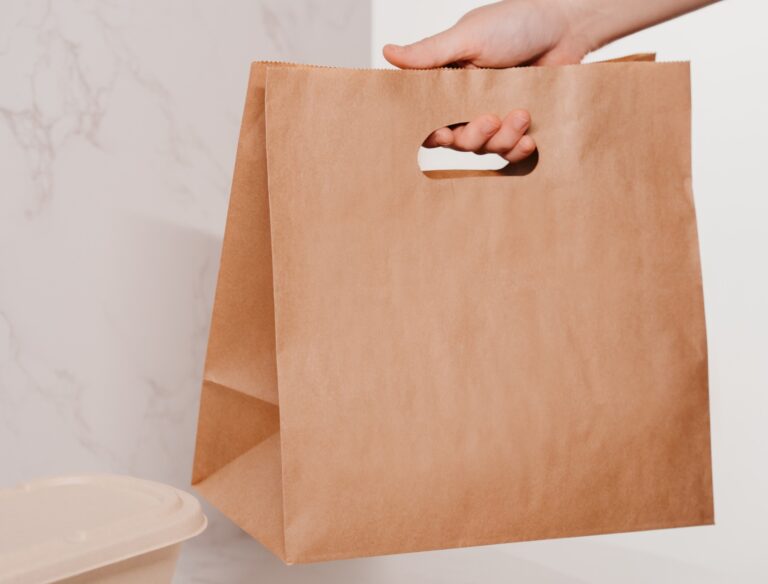
SOS paper bags are handle-free and suitable for pastries, bread, snacks and takeaway meals where handles are not essential. Paper D bags feature integrated die-cut handles for convenient carrying and a clean, minimalist appearance. Twisted handle paper bags generally provide a more comfortable grip, particularly for heavier takeaway orders or longer carrying distances. Both designs can complement different brand styles.
For orders containing food and drinks, consider using a cup carrier to keep beverages upright and stable during transport.
Choosing the right bag design helps balance carrying convenience, practicality and brand presentation.
Test the Bag With Your Actual Food Orders
Before ordering paper bags in bulk, test them using the food containers and items your business typically packs.
Check that the containers fit properly, remain stable when carried, and that the bag’s base and handles can support the total weight.
Minimal stretching or bulging is normal, as paper bags, especially kraft paper bags, are naturally flexible. However, excessive stretching can distort the bag’s shape, affect its presentation and increase the risk of tearing.
For businesses packing different types of orders, test a few common combinations to determine which bag sizes and designs work best.
Keep the Customer Experience in Mind
The paper bag is one of the last physical touchpoints before the customer leaves with the order.
It should be easy to carry, keep food organised and look appropriate for what is inside.
For a premium café or bakery, presentation may play a bigger role. For quick-service takeaway, practicality and ease of handling may matter more.
Paper D bag can create a more natural or casual look, while twisted handled paper bags can feel more polished depending on the business.
The right choice should support both the food and the experience you want customers to have.
Choose the Paper Bag Around the Order
Matching the bag to the order can make packing easier, reduce unnecessary packaging and give customers a more convenient takeaway experience.
If you are looking for a paper bag supplier in Malaysia, explore Wooba’s range of paper bags for takeaway.
Frequently Asked Questions
Both paper and plastic bags are practical choices for takeaway packaging. The right choice depends on your budget, brand positioning, customer experience and food safety requirements.
Paper bags offer a natural appearance that complements eco-conscious branding, with various sizes and designs to accommodate different food orders. Some paper bags are also certified for direct food contact, making them suitable for packaging unwrapped food items such as bread and pastries.
Not necessarily. Paper bag strength depends on more than thickness. The paper grade, fibre quality and fibre bonding all influence tear resistance and durability. For example, kraft paper made with longer, stronger fibres can offer better tear resistance than a thicker paper made with weaker fibres. Bag construction, including the base and handle attachment, also affects its overall strength.
Yes, if there are multiple cups, large drinks or a higher risk of spills. Use a separate bag or cup carrier when drinks make the order unstable or could leak onto the food packaging.
Make sure the food container and lid are properly matched and securely closed before placing them into the bag. For saucy or liquid-heavy meals, solve the leakage risk at the container level first before relying on the paper bag.
You don’t have to rely on one bag design or size for every order. For example, a bakery may use SOS bags for individual pastries and Paper D or twisted handle bags for larger takeaway orders.
Wooba offers paper bags in low minimum order quantities (MOQ), as low as one packet, allowing businesses to choose different sizes and designs based on their needs without committing to large quantities of each.
Latest Articles